How to Prevent Muscle Loss After 50: A Science-Backed Action Plan
Learn how to prevent muscle loss after 50 with proven strategies. Resistance training, nutrition, and supplementation tips to fight sarcopenia.
How to Prevent Muscle Loss After 50: A Science-Backed Action Plan
There is a moment — maybe it is struggling to open a jar, or feeling winded carrying groceries up the stairs, or noticing your arms look thinner even though you have not changed anything — when you realize your body is not holding onto muscle the way it used to.
This is not your imagination. After age 50, the average adult loses muscle mass at a rate of 1-2% per year. Strength declines even faster — roughly 1.5-3% annually. Left unaddressed, this process (called sarcopenia) quietly erodes your independence, your metabolism, your resilience to injury, and frankly, your quality of life.
But here is the encouraging news: sarcopenia is not a life sentence. It is remarkably responsive to intervention, even in people who have never set foot in a gym. The research is clear — with the right combination of resistance training, nutrition, and targeted supplementation, you can slow, halt, and in many cases reverse age-related muscle loss.
This article gives you the action plan.
Key Takeaways
- Muscle loss after 50 is real, accelerating, and consequential — but it is also highly preventable.
- Resistance training is the single most effective intervention. Nothing else comes close.
- Protein intake matters more than you think. Most adults over 50 are not eating enough.
- Creatine supplementation has strong evidence for enhancing muscle retention in older adults.
- Consistency trumps intensity. Two to three sessions per week produces significant results.
- Starting late still works. Studies show measurable gains even in adults in their 70s and 80s.
Understanding Sarcopenia: What Is Actually Happening
Sarcopenia is the progressive loss of skeletal muscle mass and function that accelerates with age. It is driven by a combination of biological changes:
The Biology of Muscle Loss
Anabolic resistance. Young muscles respond robustly to protein intake and exercise — a meal or workout triggers strong muscle protein synthesis (the building process). After 50, this signaling becomes blunted. Your muscles need a louder signal to trigger the same building response.
Hormonal decline. Testosterone, growth hormone, and IGF-1 all decrease with age. These hormones play direct roles in muscle maintenance and repair. The decline is gradual but relentless.
Neuromuscular changes. Motor neurons — the nerve cells that tell muscles to fire — deteriorate with age. This leads to weaker muscle contractions and the death of individual muscle fibers, particularly the fast-twitch fibers responsible for power and strength.
Chronic low-grade inflammation. Aging is associated with increased systemic inflammation (sometimes called “inflammaging”), which promotes muscle breakdown and inhibits repair.
Reduced physical activity. Many adults become progressively less active after 50, which creates a vicious cycle — less activity leads to more muscle loss, which makes activity harder, which leads to less activity.
Why It Matters Beyond the Mirror
Sarcopenia is not just a cosmetic issue. Research links it to:
- Falls and fractures — the leading cause of injury-related death in adults over 65
- Metabolic syndrome and type 2 diabetes — less muscle means less glucose disposal capacity
- Reduced bone density — muscles and bones are mechanically linked; weaker muscles mean weaker bones
- Loss of independence — difficulty with daily activities like standing from a chair, climbing stairs, or carrying objects
- Increased all-cause mortality — multiple studies show that muscle mass and grip strength are among the strongest predictors of longevity
The good news: every one of these outcomes improves with the interventions below.
Pillar 1: Resistance Training (The Non-Negotiable)
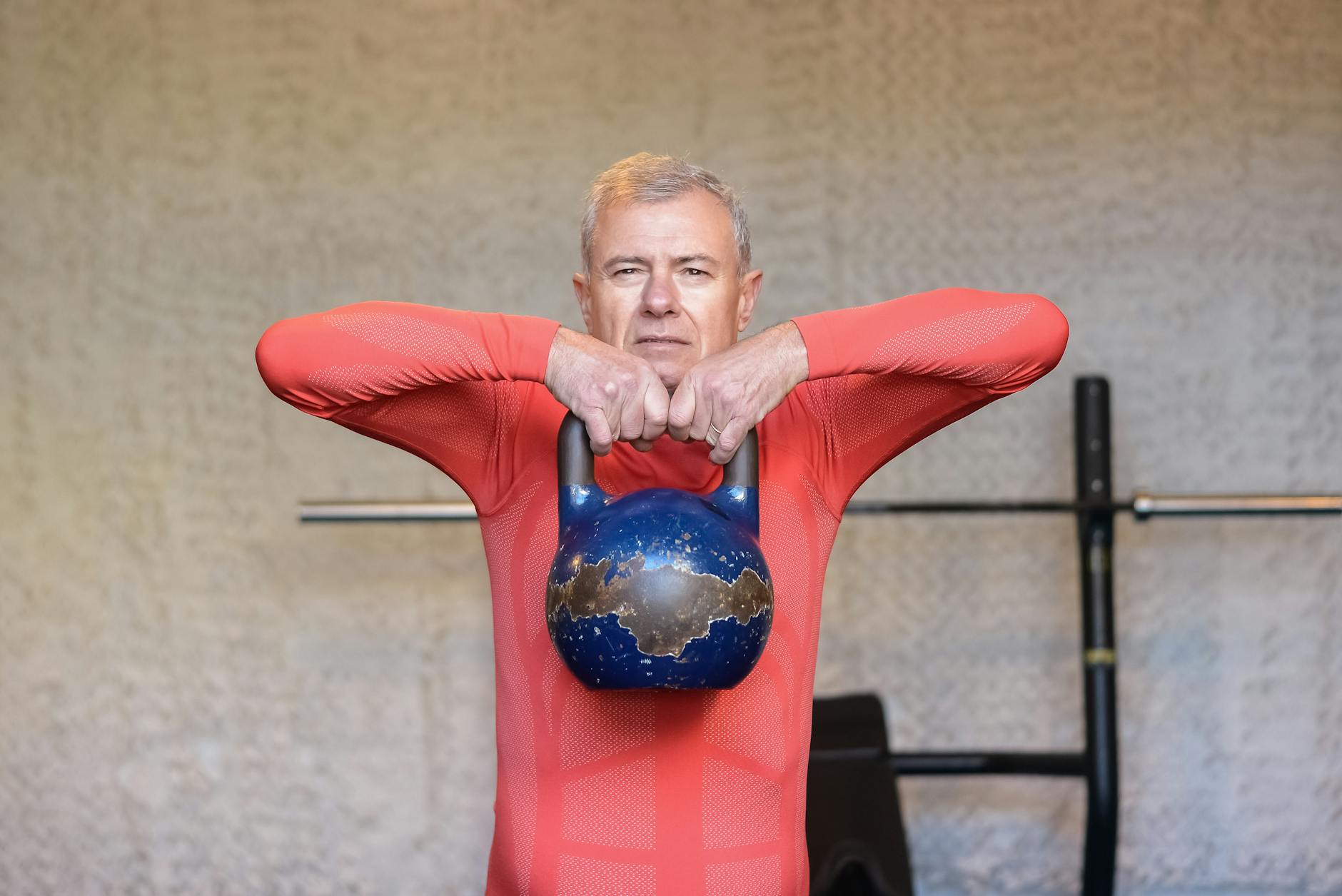
If there is one thing you take from this article, let it be this: resistance training is the single most effective intervention for preventing and reversing muscle loss after 50. Not walking. Not yoga. Not swimming. Resistance training.
Those other activities are wonderful for cardiovascular health, flexibility, and mental well-being. But when it comes to the specific stimulus required to build and maintain muscle, you need to load your muscles against resistance.
Getting Started (or Restarted)
If you have not lifted weights in years (or ever), the thought of walking into a gym can feel intimidating. Here is the simplified framework:
Frequency: 2-3 sessions per week, with at least one rest day between sessions. Research shows that 2-3 days produces roughly 80% of the maximum benefit.
Exercises: Focus on compound movements — exercises that use multiple joints and muscle groups simultaneously:
- Squat pattern (goblet squats, leg press, or even sit-to-stand from a chair)
- Hinge pattern (deadlifts, Romanian deadlifts, or hip bridges)
- Push (push-ups, chest press, overhead press)
- Pull (rows, lat pulldowns, or resistance band pulls)
- Carry/Core (farmer’s walks, planks, or loaded carries)
These five movement patterns, done consistently, work approximately 85% of your total muscle mass.
Intensity: This is where most people over 50 go wrong — they lift too light. Research suggests that working in the range of 60-80% of your one-rep max (or roughly, a weight that feels challenging for 8-12 repetitions) is optimal for hypertrophy (muscle building).
You should finish each set feeling like you could do 1-3 more reps, but not many more. If you can easily do 15+ reps, the weight is too light to provide a strong muscle-building signal.
Progression: Your muscles adapt. If you lift the same weight for the same reps indefinitely, the growth stimulus disappears. Aim to progressively increase the challenge — add a small amount of weight, do one more rep, or slow down the movement.
A Sample Week
| Day | Focus | Example |
|---|---|---|
| Monday | Full Body A | Goblet Squat, Chest Press, Seated Row, Hip Bridge, Plank |
| Wednesday | Full Body B | Leg Press, Overhead Press, Lat Pulldown, Romanian Deadlift, Farmer’s Walk |
| Friday | Full Body A | Repeat Monday with slight progression |
This is a starting point, not a permanent program. As you get comfortable, you can add volume, vary exercises, or split upper/lower days.
Safety Considerations
- Get cleared by your doctor if you have heart conditions, joint replacements, or other significant health issues.
- Learn proper form. A few sessions with a qualified trainer is a worthwhile investment. Poor form is the primary cause of injury, not heavy weight.
- Warm up thoroughly. 5-10 minutes of light cardio plus dynamic stretching before lifting.
- Progress gradually. Your tendons and ligaments adapt more slowly than muscles. Give them time.
- Listen to joint pain. Muscle soreness is expected. Sharp or persistent joint pain is a signal to modify.
Pillar 2: Nutrition for Muscle Preservation
You can not out-train a bad diet, and you definitely can not build muscle without the raw materials. Here is what the research says about nutrition for adults over 50.
Protein: The Foundation
Most adults over 50 do not eat enough protein. The current RDA (0.8g per kg of body weight) was established to prevent deficiency — not to optimize muscle maintenance during aging.
Leading researchers in the field now recommend 1.2-1.6g of protein per kilogram of body weight for adults over 50 who are physically active. For a 170-pound person, that translates to roughly 90-120 grams of protein per day.
Key protein principles:
- Distribute protein across meals. Aim for at least 25-40g per meal, 3 times per day. A single large protein meal is less effective than evenly distributed intake.
- Prioritize leucine-rich proteins. Leucine is the amino acid that most potently triggers muscle protein synthesis. Rich sources include whey protein, eggs, chicken, fish, and dairy.
- Do not skip breakfast protein. Many adults eat carb-heavy breakfasts (toast, cereal, fruit). Adding eggs, Greek yogurt, or a protein shake to breakfast significantly impacts daily protein intake.
Beyond Protein
Vitamin D: Deficiency is extremely common in adults over 50 and is associated with muscle weakness and increased fall risk. Studies suggest maintaining blood levels of 30-50 ng/mL. Many people need 2,000-4,000 IU daily to achieve this. Get tested.
Omega-3 fatty acids: Research suggests omega-3s may enhance the muscle protein synthesis response to protein intake in older adults. Two to three servings of fatty fish per week, or a quality fish oil supplement.
Adequate calories: Under-eating is a surprisingly common problem in older adults and is catastrophic for muscle maintenance. If you are resistance training and trying to maintain muscle, chronic caloric restriction works against you. Fuel appropriately.
Pillar 3: Strategic Supplementation
Supplements can not replace training and nutrition. But for adults over 50, certain supplements have strong evidence for enhancing muscle-related outcomes.
Creatine Monohydrate
If you read our guide on the best creatine supplement for adults over 40, you already know why creatine tops this list. For muscle preservation specifically:
- A meta-analysis in Experimental Gerontology found creatine plus resistance training produced significantly greater lean mass and strength gains in older adults compared to training alone
- Creatine improves workout performance by enhancing ATP regeneration, meaning you can train harder and recover better
- Studies suggest 3-5g daily is sufficient for long-term muscle support
Creatine is safe, inexpensive, and has the deepest evidence base of any sports supplement. If you are over 50 and resistance training, creatine supplementation should be a serious consideration.
Protein Supplements
Not a replacement for whole food protein, but a practical tool for hitting daily targets. Whey protein is the most studied and provides the highest leucine content per serving. For those who do not tolerate dairy, plant-based blends (pea + rice) are a reasonable alternative.
Vitamin D
As mentioned above, deficiency is widespread and directly impacts muscle function. A daily supplement of 2,000-4,000 IU (with a meal containing fat for absorption) is a reasonable approach, ideally guided by blood testing.
HMB (Beta-Hydroxy Beta-Methylbutyrate)
HMB is a metabolite of leucine that research suggests may help reduce muscle protein breakdown. The evidence is more mixed than creatine, but some studies show benefit specifically in older adults or those new to resistance training. Typical dose: 3g per day.
The “But I Am Too Old to Start” Myth
Let us address this directly: you are not too old to start.
A landmark study published in Frontiers in Physiology demonstrated that adults aged 65-75 who began resistance training gained significant muscle mass and strength within 12 weeks. Other research has shown measurable improvements in adults in their 80s and 90s.
Your body retains the ability to build muscle throughout your entire life. The rate may be slower than it was at 25, but the process still works. And the relative benefit — the improvement in daily function, fall prevention, metabolic health, and independence — is arguably greater than it is for young people.
Starting at 55, 65, or 75 is infinitely better than not starting at all.
Your 30-Day Quick-Start Plan
If this article has convinced you to take action, here is how to start this week:
Week 1: Foundation
- Schedule a doctor’s appointment for clearance (if you have significant health concerns)
- Buy a set of resistance bands or adjustable dumbbells for home, or visit a local gym
- Complete two full-body resistance training sessions (even 20 minutes counts)
- Track your protein intake for 3 days — most people are surprised how low it is
- Order a quality creatine supplement and start with 5g daily
Week 2: Build the Habit
- Complete three resistance training sessions
- Increase protein to 25-40g per meal at breakfast, lunch, and dinner
- Continue daily creatine (consistency matters more than timing)
- Add a 5-minute warm-up routine before each session
Week 3-4: Progress and Refine
- Begin tracking weights and reps to ensure progressive overload
- Consider one session with a trainer for form check
- Evaluate recovery — are you sleeping enough? Eating enough?
- Notice the small wins: better energy, improved sleep, less stiffness
Long-Term Expectations
Be patient with the process, but also confident in it.
Month 1: You will likely feel better — more energetic, sleeping better, less stiff — before you see visible changes. This is the neuromuscular adaptation phase: your brain is learning to recruit muscle fibers more effectively.
Months 2-3: Visible changes begin. Muscles feel firmer. Clothes fit differently. Strength in daily activities noticeably improves.
Months 4-6: This is where the research shows significant, measurable gains in lean mass, strength, and bone density. You are no longer just slowing decline — you are reversing it.
Year 1 and beyond: Resistance training becomes a non-negotiable part of your life because the results are too valuable to give up. Studies show that the benefits compound over time, and consistency over years produces the most dramatic outcomes.
The Bottom Line
Muscle loss after 50 is real, but it is not inevitable. The formula is straightforward:
- Lift weights 2-3 times per week with progressive intensity
- Eat sufficient protein — 1.2-1.6g per kg of body weight, spread across meals
- Supplement strategically — creatine at the top of the list, plus vitamin D and adequate omega-3s
- Be consistent — show up week after week, month after month
You are not fighting an unwinnable battle. You are deploying evidence-based strategies against a well-understood problem. And the research overwhelmingly says: it works.
Start this week. Your future self — stronger, more resilient, more capable — will be glad you did.
This article is for informational purposes only and does not constitute medical advice. Consult your healthcare provider before starting any new exercise or supplement regimen.
Ready to Take Control of Your Health?
Browse our curated selection of supplements formulated for adults 40+.